In the United States, many foods we grow up with are considered completely normal—breakfast staples, snacks, and everyday grocery items. But step outside the U.S., and some of those same foods are banned, restricted, or heavily reformulated before they’re allowed on shelves.
This isn’t about fear or conspiracy. It’s about different regulatory philosophies.
In many countries, food laws are built around prevention—if something raises health concerns, it’s restricted before it reaches consumers. In the U.S., the approach is often the opposite: products remain legal until clear harm is proven.
That difference alone creates a fascinating global divide.
American Foods Restricted or Banned Elsewhere
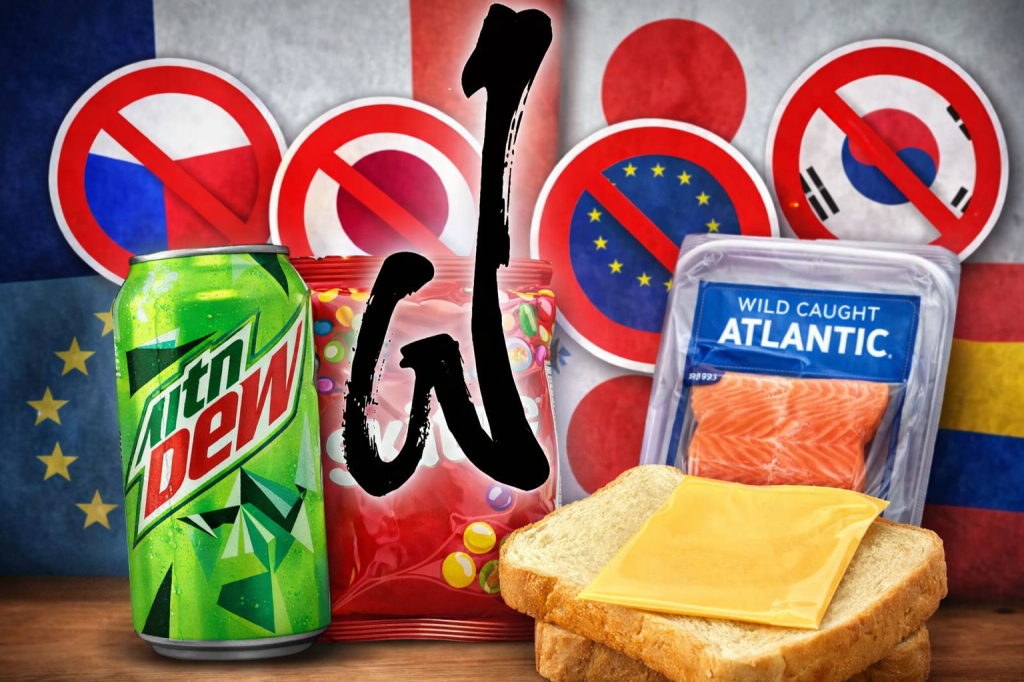
Here are several foods commonly sold and consumed in the U.S. that face restrictions in other parts of the world:
Mountain Dew (original U.S. formula)
Previously restricted or banned in parts of Europe and Japan due to additives that failed to meet their safety standards.
U.S. Farmed Salmon
Restricted in countries like Australia and New Zealand because of differences in farming practices, antibiotics, and feed regulations.
Processed American Cheese Slices
In parts of Europe, these products don’t legally qualify as “cheese” due to processing methods and additives.
Frosted Flakes (U.S. version)
Often reformulated or restricted in the EU because of sugar levels and artificial additives.
Skittles (U.S. version)
Subject to reformulation or labeling requirements in several European countries due to food dye regulations.
Pop-Tarts
Restricted or reformulated in parts of Europe because certain additives and sugar thresholds don’t meet their standards.
Highly Processed White Bread (e.g., Wonder Bread)
Some European countries restrict breads with additives that aren’t permitted under their food laws.
Hormone-Treated U.S. Beef
Banned outright in the European Union, regardless of brand or cut, due to concerns about growth hormones.
Same Brands, Different Rules
What’s interesting isn’t just what is restricted—it’s how differently the same products are treated depending on where you live.
Many global brands sell entirely different versions of their foods overseas, adjusting ingredients to comply with stricter regulations. The brand name stays the same. The recipe doesn’t.
The Real Question
This isn’t about shaming food choices or telling people what to eat.
It’s about awareness.
If a food is considered acceptable in one country but not another, it raises a fair question:
Should consumers at least be informed enough to decide for themselves?
At Flow of Wisdom, the goal isn’t fear, it’s clarity. Knowledge gives you options. And options give you power.
Food for thought.

 FLOW OF WISDOM®
Leave your questions and comments